Introduction
Context
We were asked to monitor Deustotech’s power consumption. We needed to gather the energy usage of each workplace, as well as conference rooms and printers power waste.
These were all the requirements:
Monitoring of work place sockets, meeting rooms and printers (meeting rooms and offices we treat them the same).
Data storage in Influx.
Specification of the monitored devices, using well-defined identifiers and their locations in Deustotech.
System and code documentation in Read The Docs.
RESTful API implementation and specification for data queries.
RESTful API implementation and specification for device control (turn off, on).
Specification and documentation of Hooks 1 to facilitate integration with different devices and middlewares.
Implementation of error alerts.
Backup mechanism implementation.
- 1
Hook: techniques used to alter or increase the behavior of an operating system, applications or other software components by intercepting function calls or messages or events passed between software components
Proposed solution
As a result we created an IoT system where each workplace, group room and printer is plugged to an SmartPlug.
The gathered data is stored in a time series database: influxDB.
Also a RESTful API is exposed through which the data can be retrieved, and SmartPlugs are controlled: turned ON/OFF.
System’s overview
The system architecture is shown in the following diagram:
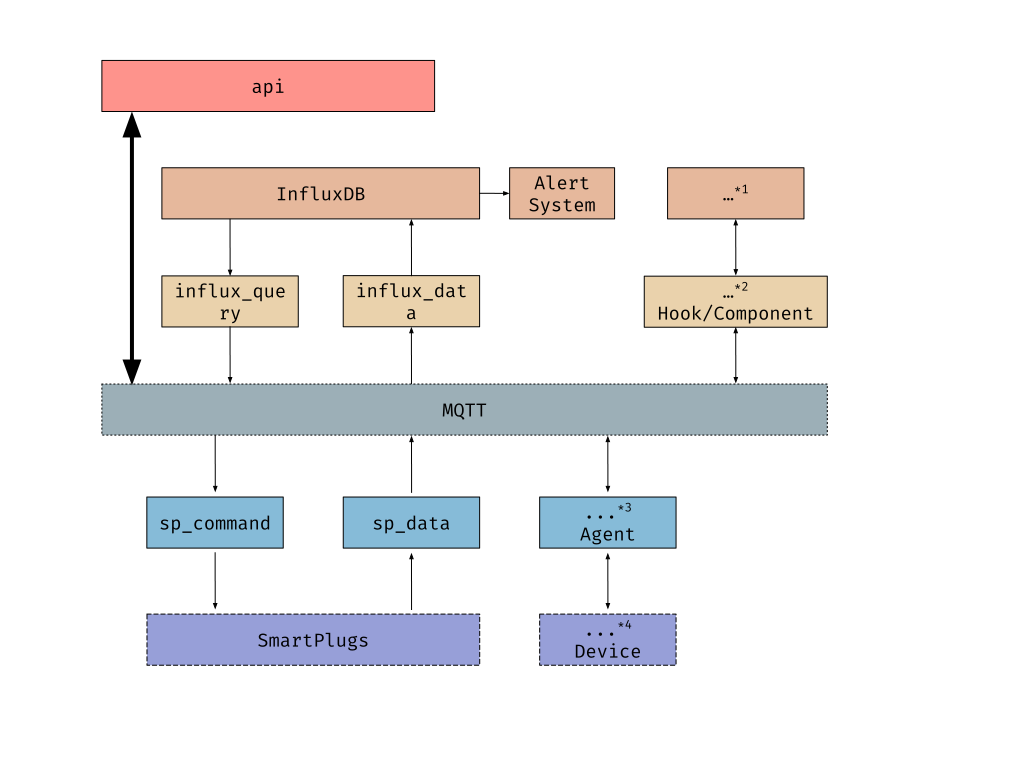
API: Abstracts data queries and control requests into a REST API web server. The API specifications are presented in API Usage. Behind the scenes it is simple its implementation: it receives a REST request, it formats the message, and it publishes to MQTT, where a Component executes the query. Finally, it waits for the Component response, which is published in another MQTT topic.
Component: It is the application that subscribes to a specific MQTT topic, where receives data queries. It responsible of executing the queries; usually this means to look up in a Database. Once the query is executed, it publishes the result to a MQTT topic where the API is listening.
Hook: It is responsible of reading from an MQTT topic the data generated by the devices and taking care of it. For example, in case of the SmartPlugs, it stores them into InfluxDB database.
Agent: It is the middleware that deals with the devices directly. Agents can be classified into two groups: controllers and collectors. The controllers send commands to the devices, such as “turn ON/OFF”. And the collectors are responsible of retrieving the data from the devices. Both of them use MQTT as the communication techonolgy with other components or applications.
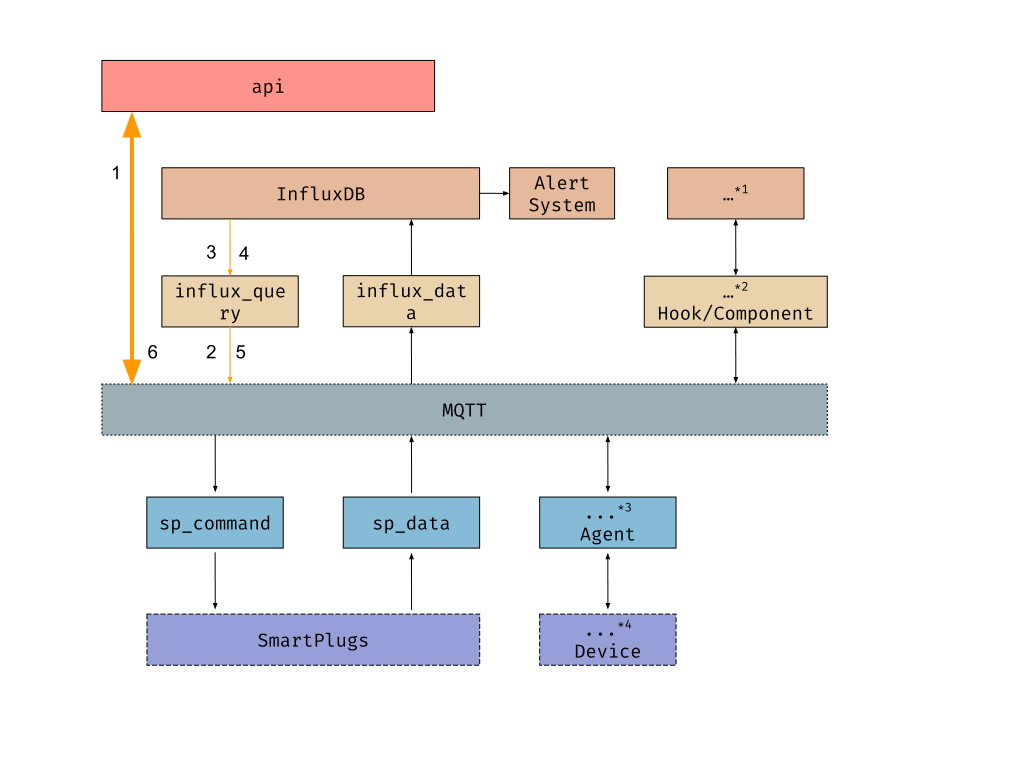
Request flow: Influx query
Client makes HTTP request to
apiandapipublishes influx query to MQTTinflux_queryreads the command from MQTTinflux_querysends query to InfluxDBInfluxDB executes query and returns the result to
influx_queryinflux_querypublishes the result to MQTTapireads query result from MQTT and returns an HTTP response
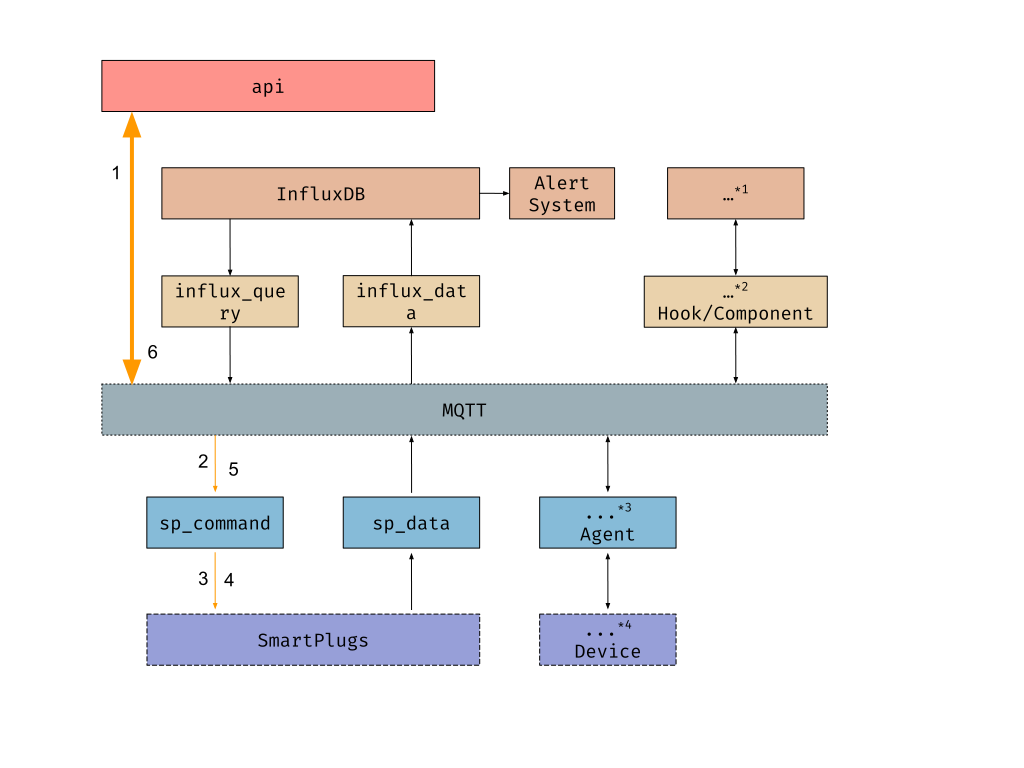
Request flow: SmartPlug command
Client makes HTTP request to
apiandapipublishes control command to MQTTsp_commandreads the command from MQTTsp_commandsends command to the SmartPlug device(s)SmartPlug executes the command and
sp_commandreads the resonsesp_commandpublishes the response to MQTTapireads control command response from MQTT and returns an HTTP response